
November 2026
Databricks released these features and improvements in November 2026.
Releases are staged. Your Databricks account might not be updated until a week or more after the initial release date.
GPT-5 and GPT-5 mini will be retired on December 11, 2026
November 19, 2026
OpenAI GPT-5 and OpenAI GPT-5 mini will be retired on December 11, 2026. OpenAI GPT-6.1 Sol is the recommended replacement for GPT-5, and OpenAI GPT-6.1 Terra is the recommended replacement for GPT-5 mini. See Legacy, deprecated, and retired models for migration guidance.
Gemini 3.6 Flash is retired
November 19, 2026
Google Gemini 3.6 Flash is retired as of November 19, 2026. API calls to Gemini 3.6 Flash are automatically redirected to Gemini 3.8 Flash, the recommended replacement, at the same price. See Legacy, deprecated, and retired models for migration guidance.
Databricks-to-Databricks Delta Sharing across regulatory domains is now generally available
November 19, 2026
Databricks-to-Databricks Delta Sharing across regulatory domains is now generally available. Commercial workspaces can share with AWS GovCloud, AWS GovCloud DoD, and Azure China. Sharing between Azure China and either AWS GovCloud or AWS GovCloud DoD is not supported. See Databricks-to-Databricks OpenSharing support matrix for cloud environments.
Configurable retention for system tables is generally available
November 18, 2026
Account admins can set an account-wide retention period from 30 to 3,650 days for supported system tables. The first 395 days of retention are free. Data retained for more than 395 days incurs Databricks storage charges. See Configure system table data retention.
Evaluate streaming responses incrementally with service policies (Beta)
November 18, 2026
Model output policies default to streaming evaluation, including existing policies. Released text can't be recalled. Select Full response evaluation to buffer the response. See Streaming responses (Beta).
Configure materialization TTLs for individual OpenSharing recipients
November 18, 2026
You can now set the materialization time to live (TTL) for each open sharing recipient, overriding the metastore default. See Configure a recipient materialization TTL.
OAuth M2M authentication for the Salesforce, ServiceNow, and Jira connectors
November 18, 2026
OAuth machine-to-machine (M2M) authentication is now generally available for the Salesforce, ServiceNow, and Jira connectors in Lakeflow Connect. M2M uses the OAuth client credentials flow, so no one signs in interactively. For Jira, M2M supports Jira Cloud only.
Genie Code CLI is now generally available
November 18, 2026
Genie Code CLI is now generally available and managed the same way as Genie Code in the workspace. Admins manage one Genie Code budget across the CLI and the workspace, and users can apply their free monthly Genie usage in the CLI. See Genie Code CLI.
Service policies protect embedding inputs (Beta)
November 18, 2026
You can now apply service policies to single or batch embedding inputs to mask sensitive data or deny requests that contain it, and to reject unsafe content before the model runs. See Embedding input guardrails.
Smart Routing now supports external models for coding agents (Beta)
November 18, 2026
In the Unity Gateway Managed Configuration beta, Smart Routing can route coding-agent subagents to external models behind a model provider service. Add them to models.sources, alongside system.ai models if needed. See Choose model sources for each agent.
ai_forecast version 2 is now generally available
November 18, 2026
Version 2 of the ai_forecast function is now generally available in Databricks SQL. A research-optimized time series foundation model powers version 2 for improved out-of-the-box accuracy, and version 2 adds built-in holiday support, external covariates, and non-negative forecasts. See ai_forecast function.
Lakebase streaming sink is generally available
November 17, 2026
The Lakebase streaming sink is generally available. It now supports Trigger.AvailableNow() on serverless jobs and notebooks. In Databricks Runtime 19 and above, it also supports merge strategies and additive schema evolution (mergeSchema). Writing to an external PostgreSQL database through a Unity Catalog connection is in Public Preview. See Connect to Lakebase.
JDBC Unity Catalog connections are now available by default for workspaces with the compliance security profile enabled
November 17, 2026
JDBC Unity Catalog connections, including support for SSL certificates, are now available by default for workspaces with the compliance security profile enabled.
Use JDBC Unity Catalog connections to connect to external databases with a custom JDBC driver, with access governed by Unity Catalog.
See JDBC connection.
Analyze agent usage and find wasted tokens with Unity Gateway Insights (Beta)
November 17, 2026
You can now generate Unity Gateway Insights reports that show what people use agents for and where tokens go to waste. Genie Code builds each report from a sample of sessions in the unified trace table. Insights is in Beta. See Analyze agent usage with Insights.
OpenAI GPT-6.2 Astra and Sol are now available on Unity Gateway
November 17, 2026
OpenAI GPT-6.2 Astra and GPT-6.2 Sol are now available on Unity Gateway. You can access these models using Foundation Model APIs.
Both models support text and image inputs, function calling, reasoning, and priority pay-per-token.
Customers are responsible for ensuring their compliance with applicable terms.
Governed tag propagation supports classic compute (Beta)
November 16, 2026
Governed tag propagation now supports classic compute running Databricks Runtime 19 or above, in addition to serverless compute. Governed tags on a source propagate to the tables and views derived from it on either type of compute.
See Tag propagation.
Share Unity Catalog agent skills with OpenSharing and Databricks Marketplace (Beta)
November 16, 2026
Providers can add Unity Catalog agent skills to OpenSharing shares and Databricks Marketplace listings. Databricks-to-Databricks recipients get read-only access to each shared skill in the catalog they create from the share, and changes that the provider makes reach recipients asynchronously. See Add agent skills to a share and Create a Marketplace listing.
TIMERANGE_NOW() on the Lakewatch query page uses the selected time range
November 16, 2026
On the Lakewatch query page, TIMERANGE_NOW() now returns the end of the selected time range instead of the current time, so you can test a detection rule's predicates against historical data. See Reference the run's window with TIMERANGE_NOW().
PostgreSQL integrated CDC pipeline is now in Beta
November 15, 2026
You can now ingest change data from PostgreSQL into Databricks using a single integrated CDC pipeline, with no separate ingestion gateway. This feature is in Beta. See Create an integrated CDC pipeline for PostgreSQL.
Metric view parameters are generally available
November 13, 2026
Parameters in metric views are now generally available. Parameters bind values at query time, so a single metric view definition serves many query variants. Querying a metric view that defines parameters requires Databricks Runtime 18.2 or above. See Use parameters with metric views.
Submit support cases from your workspace with the Get support form
November 13, 2026
You can now open a Databricks support case from your workspace with the Get support form. The form fills in issue details, attaches diagnostic files, and suggests an AI-generated solution before you submit. See Submit a Databricks support case from your workspace.
Genie Migrate can convert T-SQL to Lakeflow pipelines (Beta)
November 13, 2026
Genie Migrate can convert T-SQL scripts from SQL Server and Azure Synapse dedicated SQL pools into Lakeflow pipelines. This target framework is in Beta. In a T-SQL migration project, choose the Spark Declarative Pipelines target framework, organize your files into groups, and choose a catalog and schema for each group. Each group becomes one serverless pipeline that Genie Migrate validates with a dry run. To use this target, a workspace admin turns on Migration Projects Experimental Features from the Previews page. See Manage Databricks previews.
See Supported source dialects and target frameworks.
External access to views through the Iceberg REST catalog is in Beta
November 13, 2026
External Iceberg engines can now query Unity Catalog views over Iceberg-compatible tables through the Iceberg REST catalog. This feature is in Beta. See External access to views.
Efficient column updates (Beta)
November 13, 2026
Efficient Column Updates is in Beta. Add and backfill columns without rewriting unchanged columns. Workspace admins enable access from the Previews page. See Efficient column updates in Delta Lake.
Value lists for AI/BI dashboard parameters are generally available
November 13, 2026
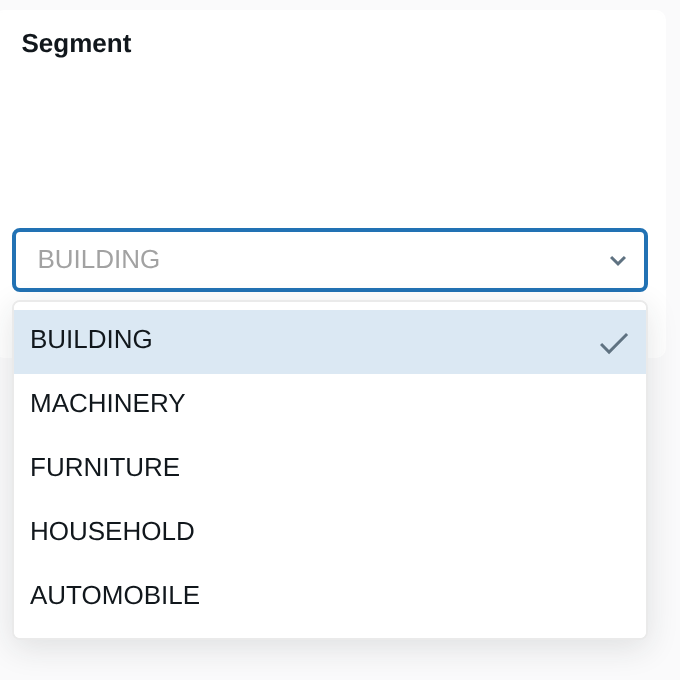
You can add a value list to a SQL dataset or local metric view parameter so that viewers pick from a fixed, ordered set of values in the parameter's filter. Add the list in the Value section of the Parameter details dialog. Viewers can still enter any value that fits the parameter's type. See Add a value list to a parameter.
AI Function task support in Declarative Automation Bundles (Beta)
November 13, 2026
Support for AI Function tasks in Declarative Automation Bundles is now in Beta. See AI Function task.
Genie ZeroOps is available in Beta
November 12, 2026
Genie ZeroOps is now available in Beta. It monitors jobs, pipelines, and tables in the background, detects failures and data quality issues, investigates the root cause, and proposes a fix. See Get started with Genie ZeroOps.
Flows are securable objects in Unity Catalog (Beta)
November 12, 2026
Pipeline flows are now securable objects in Unity Catalog. You can grant READ FLOW, REFRESH FLOW, WRITE FLOW, APPLY TAG, and MANAGE on individual flows, and CREATE FLOW on schemas. To participate in the Beta, contact your Databricks account team. See Flows in Unity Catalog.
OAuth on-behalf-of for service principals is generally available
November 12, 2026
OAuth on-behalf-of (OBO) for service principals is now generally available and turned on by default. With OBO, you use the standard user-to-machine (U2M) OAuth flow to act as a service principal you manage, without creating an OAuth secret. You must have the Service Principal Manager role on the service principal. A workspace admin no longer needs to turn on the feature from the Previews page.
See Authenticate as a service principal using OAuth OBO.
Redesigned Lakewatch Overview page and navigation
November 12, 2026
The Lakewatch Overview page now opens with a Genie question box and shows the last 7 days of ingestion and signal activity, with tabs for open alerts and system errors. The environment and SQL warehouse pickers moved to the Environment, workspace and compute menu in the top navigation bar. See The Overview page.
Google Gemini 4 Hydrogen is now available on Unity Gateway
November 12, 2026
Google Gemini 4 Hydrogen is now available on Unity Gateway. You can access this model using Foundation Model APIs.
Customers are responsible for ensuring their compliance with applicable terms.
Gemini 3.6 Flash will be retired on November 19, 2026
November 12, 2026
Google Gemini 3.6 Flash will be retired on November 19, 2026. Starting on that date, API calls to Gemini 3.6 Flash will be automatically redirected to Gemini 3.8 Flash at the same price. Gemini 3.8 Flash is the recommended replacement. See Legacy, deprecated, and retired models for migration guidance.
Budgets now support daily thresholds in addition to monthly thresholds
November 12, 2026
Budgets scoped to Unity Gateway, including budgets for Genie, now support daily per-user thresholds in addition to monthly per-user thresholds. You can set a daily threshold, a monthly threshold, or both, and configure separate alert, webhook, and block usage actions for each period. Daily thresholds reset at 00:00 UTC. See Create and monitor budgets.
ABAC DENY policies support AI securables and attachment to individual objects (Beta)
November 12, 2026
- Expanded
FORclause support: DENY policies can now apply to model services, model provider services, MCP services, agent services, and skills. - Expanded
ONclause support: DENY policies can now be attached directly on tables, volumes, functions, models, secrets, model services, model provider services, MCP services, agent services, and skills.
See Supported securable types and privileges.
Pages are generally available
November 11, 2026
Pages, governed definitions of business concepts organized by domain on the Discover page, are generally available. Curators can certify and deprecate Pages, and the new MANAGE PAGES permission controls who can publish and manage Pages in a domain. You can also manage Pages with the REST API. See Pages.
Standalone pipelines on serverless general compute are now generally available
November 11, 2026
Creating and refreshing standalone materialized views and streaming tables from a notebook on serverless general compute is now generally available. You can define them with SQL through spark.sql() or with the Python pipelines decorators. See Notebooks and Use Python with standalone pipelines.
Serverless rate limits are now in Beta
November 11, 2026
You can now limit Spark executor autoscaling for serverless jobs and pipelines by setting a size on an automated compute object. See Set rate limits on serverless compute.
Add Lakewatch folders from existing schemas
November 11, 2026
In Lakewatch, Add folder can now register an existing schema as a folder, so you no longer need CREATE SCHEMA on the catalog to add one. You can also delete a folder from Settings > Environment. See Add a folder.
Connect GitHub Copilot CLI and GitHub Copilot in Visual Studio Code with Unity Gateway
November 11, 2026
ug configure --agents copilot now sets up GitHub Copilot in Visual Studio Code alongside GitHub Copilot CLI, with Claude, GPT, and open-source models. Admins can add GitHub Copilot to the coding agent configuration to set its models, default model, HTTP headers, and tracing for both Copilot CLI and Copilot in Visual Studio Code, and turn Copilot in Visual Studio Code on or off. Developers must use the latest ug.
Connect Grok Bot/Cursor to Genie One with the Databricks Genie plugin
November 11, 2026
The Databricks Genie plugin connects Grok Bot/Cursor to the Genie One MCP, so users can ask questions about their data from Grok Bot/Cursor. A Cursor team admin publishes the plugin for the team, and each user connects by signing in with their Databricks account. See Databricks Genie plugins for ChatGPT, Claude, and Grok Bot/Cursor.
Connect ChatGPT to Genie One with the Databricks Genie plugin
November 11, 2026
The Databricks Genie plugin connects ChatGPT to the Genie One MCP, so users can ask questions about their data from ChatGPT. A ChatGPT admin sets up the plugin for the ChatGPT workspace, and each user connects by signing in with their Databricks account. See Databricks Genie plugins for ChatGPT, Claude, and Grok Bot/Cursor.
The Genie One desktop app for Windows is in Beta
November 11, 2026
The Genie One desktop app is now available for Windows in Beta, in addition to macOS. The native app opens Genie One on your desktop instead of in a browser tab, so business users can chat with data in natural language, work with their threads and documents, and use Genie Agents without a browser. See Windows.
Connect Claude to Genie One with the Databricks Genie connector
November 11, 2026
The Databricks Genie connector connects Claude to the Genie One MCP, so users can ask questions about their data from Claude. A Claude admin connects it for the team, and each user connects by signing in with their Databricks account. See Databricks Genie plugins for ChatGPT, Claude, and Grok Bot/Cursor.
Feature Views are now available by default for workspaces with the compliance security profile enabled
November 11, 2026
Feature Views are now available by default for workspaces with the compliance security profile enabled.
See Feature Views.
Notifications operator available across clouds in Lakeflow Designer
November 11, 2026
The Notifications operator in Lakeflow Designer is now available on Azure, joining AWS and GCP. Send email with table attachments when a visual data prep runs. See Notifications.
Write custom service policies in Python (Beta)
November 11, 2026
You can now write a custom service policy as a Python function in Unity Catalog. Use it for rules that SQL can't express, such as regular expressions, Python packages, or calls to an external guardrail through a service credential. It's available in select regions. See Write a custom Python service policy.
Bring your own ChatGPT subscription to Codex with Unity Gateway
November 11, 2026
You can now use your own ChatGPT Go, Plus, Pro, or Enterprise subscription with Codex and ChatGPT desktop through Unity Gateway. Requests are billed to your subscription, and Unity Gateway governs access and usage. See ChatGPT subscription support.
Text and binary inputs for protobuf requests to custom model serving endpoints (Public Preview)
November 10, 2026
Protobuf requests to custom model serving endpoints can now carry text and binary data, such as titles, images, audio, and documents, as KServe v2 BYTES tensors alongside numeric tensors in the same request. Text and binary model outputs are returned as BYTES tensors.
This feature is in Public Preview and is only available on endpoints deployed after November 10, 2026. See Protobuf tensor input.
Allow ChatGPT and Claude as partner platforms in context-based ingress policies
November 10, 2026
Context-based ingress policies can now allow traffic from ChatGPT and Claude as partner platforms. Databricks keeps their published IP ranges current, so you don't track the IPs yourself. Use these rules to allow hosted Model Context Protocol (MCP) clients, such as the Databricks Genie plugins for ChatGPT and Claude, to reach your workspace. See Allow partner platforms in context-based ingress policies.
The Genie One Chrome extension is in Beta
November 10, 2026
The Genie One Chrome extension is now available in Beta. The extension makes every new Chrome tab open Genie One in your workspace, so asking a question, searching across your tools, or opening a dashboard takes one click. Install it from the Chrome Web Store. See Use Genie One as your Chrome new tab page.
Google Gemini 4 Carbon is now available on Unity Gateway
November 10, 2026
Google Gemini 4 Carbon is now available on Unity Gateway. You can access this model using Foundation Model APIs.
Customers are responsible for ensuring their compliance with applicable terms.
Budget alerts can now trigger webhooks (Beta)
November 10, 2026
You can now configure budgets to trigger webhooks when spend thresholds are exhausted, so budget events can be routed to incident, ticketing, or automation tools. See Trigger custom webhooks.
Lakewatch is available in Beta
November 9, 2026
Lakewatch is now available in Beta. Use Lakewatch to ingest security logs into governed tables, run detection rules, and investigate and respond to alerts on Databricks. Workspace admins can control access to this feature from the Previews page. See Lakewatch documentation.
New jobs compute defaults to Auto access mode
November 9, 2026
When you create new jobs compute in the UI, the access mode now defaults to Auto instead of Dedicated. Auto uses Standard access mode unless a machine learning runtime, a GPU instance type, or a Databricks Runtime version lower than 14.3 is selected. A cluster policy that enforces a different access mode still takes precedence. Existing jobs are not changed.
For workspaces with the compliance security profile enabled, this change takes effect in December 2026. See What's coming.
Databricks Genie app in Microsoft Teams is now generally available
November 9, 2026
The Databricks Genie app in Microsoft Teams is now generally available. Chat with the app in a direct message or mention @Databricks Genie in a channel or group chat to get answers to data questions without leaving Microsoft Teams. See Databricks Genie app in Microsoft Teams.
Databricks Genie app for Slack is now generally available
November 9, 2026
The Databricks Genie app for Slack is now generally available. Send a direct message to the app or mention @Genie in a channel or group DM to get answers to data questions without leaving Slack. See Databricks Genie app for Slack.
Genie Search is now generally available
November 9, 2026
Genie Search is now generally available. Genie Search indexes your organization's knowledge in sources such as Google Drive, Jira, Confluence, and Workday, so Genie One can search all of that knowledge in one place. Databricks indexes each document's permissions with its content and keeps both current, so users see only the documents that they can already access in the source.
Genie Search also powers the following features in Genie One:
- Org directories: Find teammates, browse the org chart, and view profiles from Workday. See Browse org directories in Genie One.
- Search in Discover: Search Databricks assets and content from connected sources in one place. See Use Genie Search in Genie One.
Databricks recommends using Genie Search together with MCP connectors, which let Genie One access live data and take action in the applications your team uses.
Genie Ontology is now generally available
November 9, 2026
Genie Ontology is now generally available. Genie Ontology is the context layer that gives Genie One, Genie Code, and other AI agents a business-aware map of your organization. It combines modeled knowledge that you define in Unity Catalog semantics with learned knowledge that Genie extracts from your assets and usage.
Use cleaned AI answers in Lakeflow Designer (Public Preview)
November 9, 2026
Clean supported AI Function outputs in Lakeflow Designer for downstream transformations. Cleaned results include answer values, error messages, and raw responses in separate columns. See AI Function.
Shift dates in Lakeflow Jobs parameters with date arithmetic (Beta)
November 9, 2026
Dynamic value references in Lakeflow Jobs can now shift a date by a duration before formatting it. For example, {{(job.start_time - 1.day).iso_date}} passes the date of the day before the run started to a task. Date arithmetic is in Beta.
See Shift dates with date arithmetic.
Anthropic Claude Fable 5.2 is now available on Unity Gateway
November 9, 2026
Anthropic Claude Fable 5.2 is now available on Unity Gateway. You can access this model using Foundation Model APIs.
Customers are responsible for ensuring their compliance with applicable terms.
Provision Claude desktop with MDM using Unity Gateway
November 9, 2026
Admins can use ug configure --global from their mobile device management (MDM) software to provision the Claude desktop app machine-wide with governed models, MCP servers, and skills, and users can import their claude.ai projects and chats. This is available on macOS only. Learn more.
AI Functions Asynchronous API (Beta)
November 9, 2026
You can now use the AI Functions Asynchronous API to run ai_parse_document, ai_extract, or ai_classify asynchronously on up to 50,000 requests from a JSONL file in a Unity Catalog volume. The batch writes one result for each request to a file in a volume. Workspace admins can turn on the AI Functions Asynchronous API preview from the Previews page. This feature is in Beta.
See the Asynchronous API reference. For examples, see document parsing, information extraction, and classification.
Recover dropped Unity Catalog volumes with UNDROP VOLUME
November 7, 2026
You can now recover a dropped Unity Catalog volume within 7 days. Find its ID with SHOW VOLUMES DROPPED, then run UNDROP VOLUME WITH ID to restore it with its privileges and tags. Requires Databricks Runtime 19 and above. See UNDROP VOLUME.
Unity Catalog wikis are in Beta
November 6, 2026
Unity Catalog wikis are in Beta. A wiki lets your team document a table's meaning, intended use, and sources, then collaborate on that information. Data owners and stewards draft and publish wikis in Catalog Explorer, manually or with Genie Code, and anyone who can view the table's metadata can comment on, suggest edits to, and react to published wikis. Account admins can control access to this feature from the Previews page.
Restore a deleted Unity Catalog metastore with the REST API (Public Preview)
November 6, 2026
Account admins can now restore a deleted Unity Catalog metastore by its ID. You can restore a metastore for up to 5 days after it's deleted. See Restore a deleted metastore.
Install drivers for JDBC Unity Catalog connections from Maven
November 6, 2026
You can now install the JDBC driver for a JDBC Unity Catalog connection from a Maven coordinate instead of uploading it to a volume. This requires serverless compute, Databricks Runtime 19 or above, or SQL warehouses 2026.43 or above. See Maven coordinates.
Zhipu AI GLM 5.2 is scheduled for retirement
November 6, 2026
Zhipu AI GLM 5.2 is deprecated and will be retired on February 4, 2027. GLM 5.3 is the recommended replacement. See Legacy, deprecated, and retired models for migration guidance.
Distinguish Lakeflow Designer Python previews from full runs (Public Preview)
November 6, 2026
Python operators in Lakeflow Designer now expose config["is_preview"] so your code can skip side effects during previews. See Python preview mode.
AI Search endpoint metrics show error sources and ingestion rate
November 6, 2026
AI Search endpoint metrics show whether failed queries come from the embedding model endpoint or from AI Search, and how many rows per second are written to the indexes on standard endpoints. View the metrics on the endpoint's Metrics tab or retrieve them with the API. See Monitor AI Search endpoints.
Load Unity Catalog tables into PyTorch on AI Runtime (Beta)
November 6, 2026
UCDataset streams rows from Unity Catalog tables directly into PyTorch training loops on AI Runtime, without Spark or a SQL warehouse. It applies filter expressions and deletion vectors as it reads, and splits the matching rows across GPUs and data loader workers. See Load Unity Catalog tables into PyTorch with UCDataset.
Run Claude Code and Codex in the SSH tunnel
November 5, 2026
Claude Code and Codex are now available in SSH tunnel sessions. The agents send model requests through Unity Gateway and authenticate with the credentials of your SSH session. This requires Databricks CLI version 1.23.0 or above. See Run coding agents in an SSH session.
Smart Routing is faster and lower cost, and now routes subagents only (Beta)
November 5, 2026
Smart Routing now routes only subagents, not the first prompt. It costs up to 70% less in internal benchmarks and cuts p90 routing latency from 9 seconds to 2 seconds. Smart Routing for Codex is paused. See Select models or use Smart Routing.

Genie Migrate for Serverless (Beta)
November 5, 2026
You can now migrate classic jobs to serverless compute in the background with Genie Migrate for Serverless, using the compute-migrations command group in the Databricks CLI. For each job, the agent builds a serverless working copy that you review and approve before it changes the original job. You can optionally run the working copy one time to validate it. To migrate multiple jobs, create one migration per job from a script. Genie Migrate for Serverless is also available in Genie Code, where you run /compute to migrate a single notebook or job. Workspace admins can enable both by opting into the Compute Agent preview on the Previews page. See Migrate jobs with the Databricks CLI.
Allow partner platforms in context-based ingress policies
November 5, 2026
Context-based ingress policies can now allow traffic from Power BI, Tableau Cloud, dbt Cloud, and the Genie apps for Slack and Microsoft Teams. Databricks keeps partner details current, so you don't track IPs. See Allow partner platforms in context-based ingress policies.
Metric view listings are generally available in Databricks Marketplace
November 5, 2026
Providers can publish governed business metrics in Databricks Marketplace by adding metric views. Only Databricks recipients can use shared metric views. See Create a Marketplace listing and Add metric views to a share.
External knowledge sources are in Beta
November 5, 2026
External knowledge sources are in Beta. You can pull metadata from Power BI semantic models into Databricks, and Genie can use your Power BI measure definitions when it answers questions. To use external knowledge sources, an account admin turns on External knowledge from the account console Previews page. See Manage account-level previews.
Calculate across rows in Lakeflow Designer (Public Preview)
November 5, 2026
Use the Multi-Row Formula operator in Lakeflow Designer for running totals, ranks, moving averages, and other calculations across ordered rows. See Multi-Row Formula.
DeepSeek V4 Flash (0731) is retired
November 5, 2026
DeepSeek V4 Flash (0731) is retired as of November 5, 2026. DeepSeek V4.1 Flash (1017) is the recommended replacement. See Legacy, deprecated, and retired models for migration guidance.
Upcoming removal of AI Functions support on older runtimes
November 5, 2026
Starting on February 1, 2027, calls in SQL queries to AI Functions that require Databricks Runtime 15.4 LTS or above are no longer supported on Databricks Runtime versions below 17.3 LTS. This change doesn't affect ai_forecast, ai_top_drivers, ai_detect_anomalies, ai_predict_class, ai_predict_value, vector_search, or the AI Functions REST API. To continue using affected AI Functions in SQL, use Databricks Runtime 17.3 LTS and above.
Scope modifiers for personal access tokens and OAuth are generally available
November 4, 2026
Scope modifiers narrow an API scope to a subset of its operations, such as clusters:read for read operations or sql:restricted-query for read-only SQL queries, in personal access tokens, OAuth secrets, and OAuth token requests. See Narrow API scopes with scope modifiers.
Moonshot AI Kimi K3.1 Pro is now available on Unity Gateway
November 4, 2026
Moonshot AI Kimi K3.1 Pro is now available on Unity Gateway for coding, knowledge work, and agentic tool use, with native vision and reasoning. It is available on pay-per-token endpoints in us-east-1.
To query the model and see supported regions, see Use foundation models.
Publish Unity Gateway Skills with a GitHub Action in Beta
November 4, 2026
Publish Git-managed skills to Unity Catalog with a GitHub Action in Beta. Map folders to skills and publish updates on merges to your publishing branch. See Publish skills from your GitHub repository.
Detect CSV delimiters in Lakeflow Designer (Public Preview)
November 4, 2026
When you add a CSV file, Lakeflow Designer samples it to detect comma, tab, semicolon, or pipe delimiters. You can set the delimiter manually when detection does not match your file. See Drag and drop a file.
Create Lakeflow Designer parameters while configuring fields (Public Preview)
November 4, 2026
Create a parameter from a supported operator field in Lakeflow Designer, then use it in the field. See Reference a parameter from an operator.
Add aggregations for several Lakeflow Designer columns (Public Preview)
November 4, 2026
Select multiple columns when adding an aggregation in Lakeflow Designer. The Aggregate operator creates a separate aggregation for each selected column. See Aggregate.
AI Function tasks for jobs (Beta)
November 4, 2026
You can now add AI Function tasks to your Databricks jobs to run ai_parse_document, ai_extract, or ai_classify on the files in a volume or the rows of a table, without writing SQL. Each run processes only the inputs that are new or changed since the previous run and writes the results to a Unity Catalog table that later tasks can read. This feature is in Beta.
See AI Function tasks for jobs.
Okta connector is available in Beta
November 3, 2026
The managed Okta connector is now available in Beta in Databricks Lakeflow Connect. Workspace admins can enable Lakeflow Connect for Okta on the Previews page.
Use the connector to ingest identity and access data from Okta into Databricks, including users, groups, group memberships, app integrations, devices, policies, and administrator roles. The connector uses SSWS API token authentication and supports incremental ingestion.
Lakehouse//RT supports fine-grained access control (Beta)
November 3, 2026
You can now run read queries on tables protected by row filters, column masks, and attribute-based access control (ABAC) policies with Lakehouse//RT. See Fine-grained access control.
Start Lakeflow Designer workflows from suggested or recent tables
November 3, 2026
Start a visual data prep in Lakeflow Designer from suggested, favorite, or recently used tables on the welcome screen. See Browse existing tables.
Edit shared Lakeflow Designer operators with Genie Code
November 3, 2026
Use Genie Code in Lakeflow Designer to create shared custom operators or edit them by workspace YAML file path. See Build a shared custom operator.
Write Lakeflow Designer results to Google Drive or SharePoint
November 3, 2026
Write Lakeflow Designer results to Google Drive or SharePoint with the Output operator. Each run creates or replaces a file of up to 2.75 MiB. See Output.
Set checkpoints across a Lakeflow Designer file
November 3, 2026
Set checkpoint options across a visual data prep file with Set all to Auto or Set all to On. See Configure operator checkpoints.
Control Lakebase sink upserts with merge strategies
November 3, 2026
When you write to Lakebase from Structured Streaming, you can use merge strategies to control how upserts update individual columns. Keep the first or last value, ignore nulls, or select values by an ordering column. Merge strategies require Databricks Runtime 19 and above. See Merge strategies for upserts.
Trigger Lakeflow Jobs when upstream jobs complete (Beta)
November 3, 2026
You can now run a Lakeflow Job when one or more upstream jobs complete, including across workspaces attached to the same Unity Catalog metastore. Configure dependencies on the downstream job. See Trigger jobs when upstream jobs complete.
Approve Genie tool actions in Slack and Microsoft Teams (Public Preview)
November 3, 2026
When Genie needs approval to run a connected external tool, the Databricks Genie apps for Slack and Microsoft Teams now show an approval prompt in the reply, so you can allow or deny the action without leaving the chat. See Approve tool actions and Approve tool actions.
Use Claude desktop and ChatGPT desktop work agents with Unity Gateway
November 3, 2026
You can now use ug to configure the Claude desktop and ChatGPT desktop work agents with governed models, MCP servers, and skills. Subscription relay is available only in Claude desktop. Learn more.
Zerobus Ingest into default storage is now generally available
November 2, 2026
Ingesting into tables backed by default storage with Zerobus Ingest in Lakeflow Connect is now generally available. See Create or identify the target table.
Higher limits and BROWSE support for Unity Catalog secrets
November 2, 2026
A schema can now hold up to 1,000 Unity Catalog secrets, and a metastore up to 10,000, up from 100 and 1,000. The limits apply to Databricks-managed secrets and secrets backed by AWS Secrets Manager. BROWSE on a catalog now applies to Unity Catalog secrets, so users can discover secrets and their metadata without being able to read the values or reference the secrets in code. See Grant access to secrets.
Simba JDBC Driver (Legacy) 2.8.7 is available
November 2, 2026
Simba JDBC Driver (Legacy) 2.8.7 updates jackson-core, jackson-databind, and jackson-datatype-jsr310 to 2.21.8. Download it from the JDBC drivers archive under All JDBC Driver Versions (Simba).
Managed warehouse for MLflow (Beta)
November 2, 2026
With managed warehouse, users can view traces stored in Unity Catalog in the MLflow UI without selecting a SQL warehouse. MLflow runs trace queries on a SQL warehouse that it creates in your workspace when your workspace supports it, and on serverless compute otherwise. Workspace admins can enable Managed Warehouse for MLflow on the Previews page. See Managed warehouse for MLflow traces.
ai_decide (Beta) now delivers higher answer accuracy
November 2, 2026
ai_decide (Beta) now uses a new model that answers questions 33% more accurately, while maintaining existing low latency. See ai_decide function.
AI Functions usage is now included in Unity Gateway budgets
November 1, 2026
Beginning November 1, 2026, Unity Gateway budgets include spend from task-specific AI Functions such as ai_parse_document, ai_extract, and ai_classify across batch and real-time execution paths. See Manage budgets for Unity Gateway.