AI エージェントの使用を開始する
Mosaic AI Agent Framework を使用して、初めての AI エージェントを構築します。このチュートリアルでは、次のことを行います。
- Agent Frameworkを使用してエージェントを作成します。
- エージェントにツールを追加します。
- エージェントを Databricks モデルサービングエンドポイントにデプロイします。
エージェントとその他の 生成AIアプリの概念の概要については、「 生成AI AI アプリとは」を参照してください。
必要条件
ワークスペースで次の機能が有効になっている必要があります。
- Unity Catalog
- モザイク AI エージェントフレームワーク
- 基盤モデル (トークン単位の従量課金, プロビジョニング スループット, または外部モデル). 利用可能な地域が限られている機能を見る
ノートブックの例
このノートブックには、最初の AI エージェントを作成してデプロイするために必要なすべてのコードが含まれています。ノートブック を Databricks ワークスペースにインポートして実行します。
Mosaic AIエージェントのデモ
エージェントの定義
AI エージェントは、次のもので構成されます。
- 推論と意思決定が可能な大規模言語モデル (LLM)
- LLM がテキストを生成するだけでなく、Python コードの実行やデータの取得など、さまざまなことを行うために使用できるツール
Databricks ノートブックで次のコードを実行して、単純なツール呼び出しエージェントを定義します。
-
必要なPythonパッケージをインストールします。
Python%pip install -U -qqqq mlflow databricks-openai databricks-agents"
dbutils.library.restartPython()mlflow: エージェント開発とエージェント トレースに使用されます。databricks-openai: Databricks がホストする LLM に接続し、Unity Catalog ツールにアクセスするために使用されます。databricks-agents: エージェントをパッケージ化してデプロイするために使用されます。
-
エージェントを定義します。このコード スニペットでは、次のことを行います。
- OpenAI クライアントを使用して Databricks モデルサービング エンドポイントに接続します。
autolog()を使用して MLflow トレースを有効にします。これにより、インストルメンテーションが追加され、クエリを送信したときにエージェントが何をするかを確認できます。system.ai.python_execツールをエージェントに追加します。この組み込み Unity Catalog 関数を使用すると、エージェントは Python コードを実行できます。- MLflow ヘルパー関数 (
output_to_responses_items_stream、create_function_call_output_item) を使用して、ストリーミング LLM 出力を Responses API 互換形式に変換します。
Pythonimport json
import mlflow
from databricks.sdk import WorkspaceClient
from databricks_openai import UCFunctionToolkit, DatabricksFunctionClient
# Import MLflow utilities for converting from chat completions to Responses API format
from mlflow.types.responses import output_to_responses_items_stream, create_function_call_output_item
# Enable automatic tracing for easier debugging
mlflow.openai.autolog()
# Get an OpenAI client configured to connect to Databricks model serving endpoints
openai_client = WorkspaceClient().serving_endpoints.get_open_ai_client()
# Load Databricks built-in tools (Python code interpreter)
client = DatabricksFunctionClient()
builtin_tools = UCFunctionToolkit(function_names=["system.ai.python_exec"], client=client).tools
for tool in builtin_tools:
del tool["function"]["strict"]
def call_tool(tool_name, parameters):
if tool_name == "system__ai__python_exec":
return DatabricksFunctionClient().execute_function("system.ai.python_exec", parameters=parameters).value
raise ValueError(f"Unknown tool: {tool_name}")
def call_llm(prompt):
for chunk in openai_client.chat.completions.create(
model="databricks-claude-sonnet-4-5",
messages=[{"role": "user", "content": prompt}],
tools=builtin_tools,
stream=True
):
yield chunk.to_dict()
def run_agent(prompt):
"""
Send a user prompt to the LLM, and yield LLM + tool call responses
The LLM is allowed to call the code interpreter tool if needed, to respond to the user
"""
# Convert output into Responses API-compatible events
for chunk in output_to_responses_items_stream(call_llm(prompt)):
yield chunk.model_dump(exclude_none=True)
# If the model executed a tool, call it and yield the tool call output in Responses API format
if chunk.item.get('type') == 'function_call':
tool_name = chunk.item["name"]
tool_args = json.loads(chunk.item["arguments"])
tool_result = call_tool(tool_name, tool_args)
yield {"type": "response.output_item.done", "item": create_function_call_output_item(call_id=chunk.item["call_id"], output=tool_result)}
エージェントをテストする
エージェントをテストするには、Pythonコードの実行が必要なプロンプトでエージェントをクエリします。
for output_chunk in run_agent("What is the square root of 429?"):
print(output_chunk)
LLM の出力に加えて、詳細なトレース情報がノートブックに直接表示されます。これらのトレースは、低速または失敗したエージェント コールをデバッグするのに役立ちます。これらのトレースは、 mlflow.openai.autolog() .
エージェントをデプロイする
エージェントが作成されたので、それをパッケージ化して Databricks サービス エンドポイントにデプロイできます。デプロイされたエージェントに関するフィードバックの収集を開始するには、エージェントを他のユーザーと共有し、組み込みのチャットUIを使用してチャットします。
デプロイ用のエージェント コードの準備
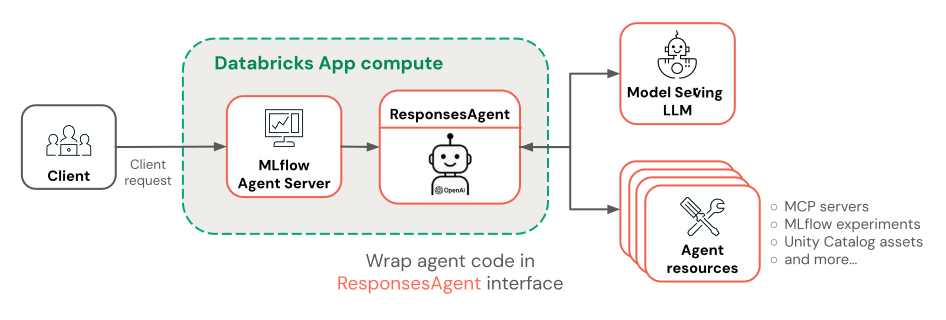
デプロイ用にエージェント コードを準備するには、MLflow の ResponsesAgent インターフェイスを使用してラップします。ResponsesAgent インターフェイスは、Databricks にデプロイするエージェントをパッケージ化するための推奨される方法です。
-
ResponsesAgentインターフェースを実装するには、predict_stream()(ストリーミング応答用)メソッドとpredict()(非ストリーミング要求用)メソッドの両方を定義します。基盤となるエージェント ロジックはすでに Responses API 互換のイベントを出力しているため、実装は簡単です。Pythonfrom mlflow.pyfunc import ResponsesAgent
from mlflow.types.responses import ResponsesAgentRequest, ResponsesAgentResponse, ResponsesAgentStreamEvent
class QuickstartAgent(ResponsesAgent):
def predict_stream(self, request: ResponsesAgentRequest):
# Extract the user's prompt from the request
prompt = request.input[-1].content
# Stream response items from our agent
for chunk in run_agent(prompt):
yield ResponsesAgentStreamEvent(**chunk)
def predict(self, request: ResponsesAgentRequest) -> ResponsesAgentResponse:
outputs = [
event.item
for event in self.predict_stream(request)
if event.type == "response.output_item.done"
]
return ResponsesAgentResponse(output=outputs) -
次のコードをノートブックに追加して、
ResponsesAgentクラスをテストします。Pythonfrom mlflow.types.responses import ResponsesAgentRequest
AGENT = QuickstartAgent()
# Create a ResponsesAgentRequest with input messages
request = ResponsesAgentRequest(
input=[
{
"role": "user",
"content": "What's the square root of 429?"
}
]
)
for event in AGENT.predict_stream(request):
print(event) -
すべてのエージェントコードを1つのファイルに結合して、ログに記録してデプロイできるようにします。
- すべてのエージェント コードを 1 つのノートブック セルに統合します。
- セルの上部に、エージェントをファイルに保存するための
%%writefile quickstart_agent.pyマジックコマンドを追加します。 - セルの下部で、エージェントオブジェクトを使用して
mlflow.models.set_model()に電話をかけます。これにより、予測を提供するときに使用するエージェント オブジェクトが MLflow に指示されます。この手順により、エージェント コードへのエントリ ポイントが効果的に構成されます。
ノートブックのセルは、次のようになります。
%%writefile quickstart_agent.py
import json
from databricks.sdk import WorkspaceClient
from databricks_openai import UCFunctionToolkit, DatabricksFunctionClient
import mlflow
from mlflow.pyfunc import ResponsesAgent
from mlflow.types.responses import (
ResponsesAgentRequest,
ResponsesAgentResponse,
ResponsesAgentStreamEvent,
output_to_responses_items_stream,
create_function_call_output_item
)
# Enable automatic tracing for deployed agent
mlflow.openai.autolog()
# Get an OpenAI client configured to talk to Databricks model serving endpoints
openai_client = WorkspaceClient().serving_endpoints.get_open_ai_client()
# Load Databricks built-in tools (Python code interpreter)
client = DatabricksFunctionClient()
builtin_tools = UCFunctionToolkit(function_names=["system.ai.python_exec"], client=client).tools
for tool in builtin_tools:
del tool["function"]["strict"]
def call_tool(tool_name, parameters):
if tool_name == "system__ai__python_exec":
return DatabricksFunctionClient().execute_function("system.ai.python_exec", parameters=parameters).value
raise ValueError(f"Unknown tool: {tool_name}")
def call_llm(prompt):
for chunk in openai_client.chat.completions.create(
model="databricks-claude-sonnet-4-5",
messages=[{"role": "user", "content": prompt}],
tools=builtin_tools,
stream=True
):
yield chunk.to_dict()
def run_agent(prompt):
"""
Send a user prompt to the LLM, and yield LLM + tool call responses
The LLM is allowed to call the code interpreter tool if needed, to respond to the user
"""
# Convert output into Responses API-compatible events
for chunk in output_to_responses_items_stream(call_llm(prompt)):
yield chunk.model_dump(exclude_none=True)
# If the model executed a tool, call it and yield the tool call output in Responses API format
if chunk.item.get('type') == 'function_call':
tool_name = chunk.item["name"]
tool_args = json.loads(chunk.item["arguments"])
tool_result = call_tool(tool_name, tool_args)
yield {"type": "response.output_item.done", "item": create_function_call_output_item(call_id=chunk.item["call_id"], output=tool_result)}
class QuickstartAgent(ResponsesAgent):
def predict_stream(self, request: ResponsesAgentRequest):
# Extract the user's prompt from the request
prompt = request.input[-1].content
# Stream response items from our agent
for chunk in run_agent(prompt):
yield ResponsesAgentStreamEvent(**chunk)
def predict(self, request: ResponsesAgentRequest) -> ResponsesAgentResponse:
outputs = [
event.item
for event in self.predict_stream(request)
if event.type == "response.output_item.done"
]
return ResponsesAgentResponse(output=outputs)
AGENT = QuickstartAgent()
mlflow.models.set_model(AGENT)
エージェントのログを記録する
エージェントをログに記録し、 Unity Catalogに登録する これにより、エージェントとその依存関係がデプロイ用の 1 つのアーティファクトにパッケージ化されます。
import mlflow
from mlflow.models.resources import DatabricksFunction, DatabricksServingEndpoint
from pkg_resources import get_distribution
# Change the catalog name ("main") and schema name ("default") to register the agent to a different location
registered_model_name = "main.default.quickstart_agent"
# Specify Databricks resources that the agent needs to access.
# This step lets Databricks automatically configure authentication
# so the agent can access these resources when it's deployed.
resources = [
DatabricksServingEndpoint(endpoint_name="databricks-claude-sonnet-4-5"),
DatabricksFunction(function_name="system.ai.python_exec"),
]
mlflow.set_registry_uri("databricks-uc")
logged_agent_info = mlflow.pyfunc.log_model(
artifact_path="agent",
python_model="quickstart_agent.py",
extra_pip_requirements=[f"databricks-connect=={get_distribution('databricks-connect').version}"],
resources=resources,
registered_model_name=registered_model_name
)
エージェントをデプロイする
登録済みエージェントをサービス エンドポイントにデプロイします。
from databricks import agents
deployment_info = agents.deploy(
model_name=registered_model_name,
model_version=logged_agent_info.registered_model_version,
scale_to_zero=True
)
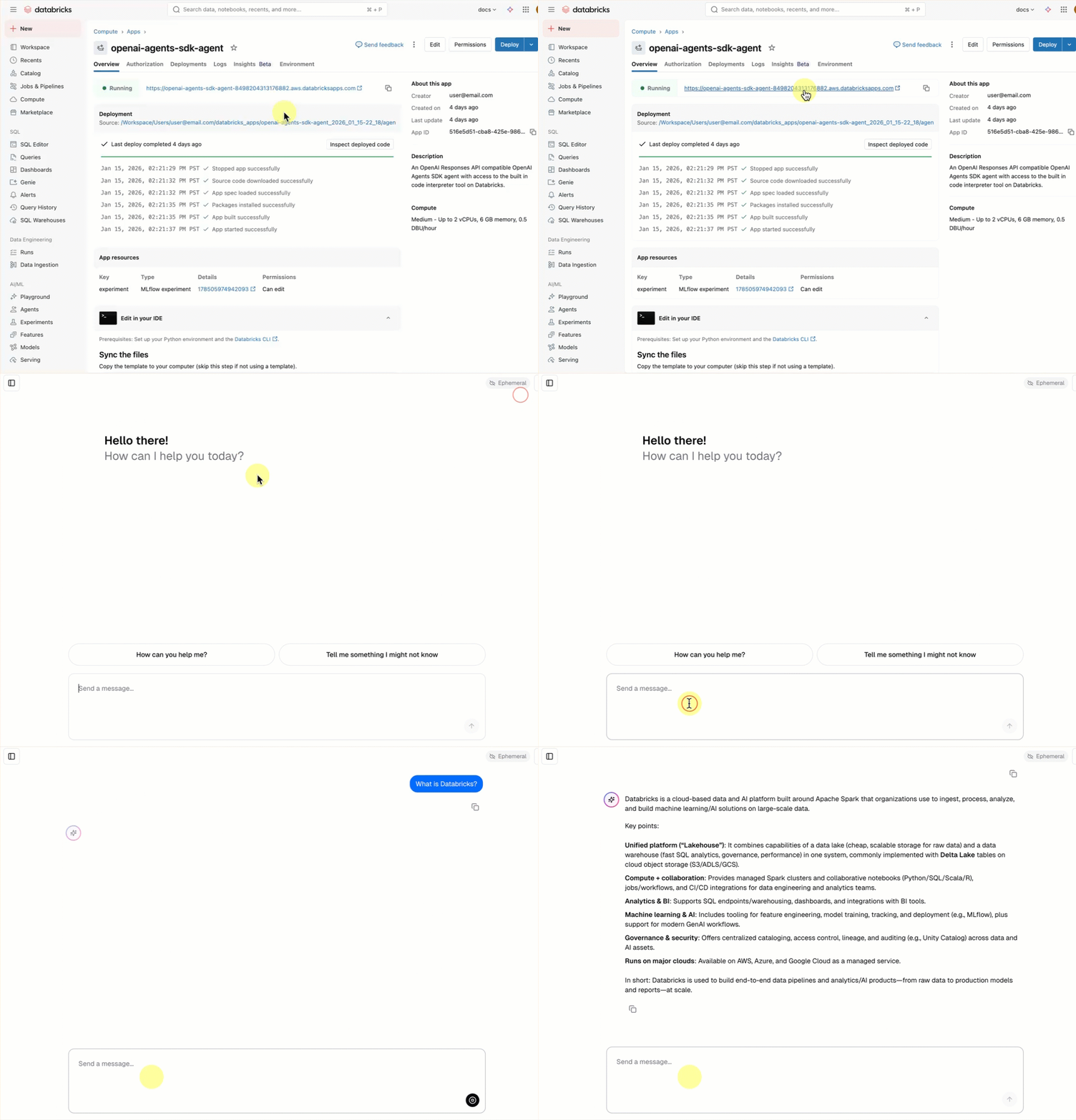
エージェントエンドポイントが起動したら、 AI Playground を使用してチャットしたり、 関係者と共有 してフィードバックを得たりできます。
次のステップ
目標に基づいて次に進む場所を選択してください。
エージェントの品質を測定して改善する : 「エージェント評価のクイックスタート」を参照してください。
より高度なエージェントの構築 :非構造化データを使用してRAGを実行し、マルチターンの会話を処理し、エージェント評価を使用して品質を測定するエージェントを作成します。チュートリアル: 取得エージェントのビルド、評価、デプロイを参照してください。
他のフレームワークを使用してエージェントを構築する方法を学ぶ : LangGraph、純粋なPython、OpenAIなどの一般的なライブラリを使用してエージェントを構築する方法を学びます。「コードで AI エージェントを作成する」を参照してください